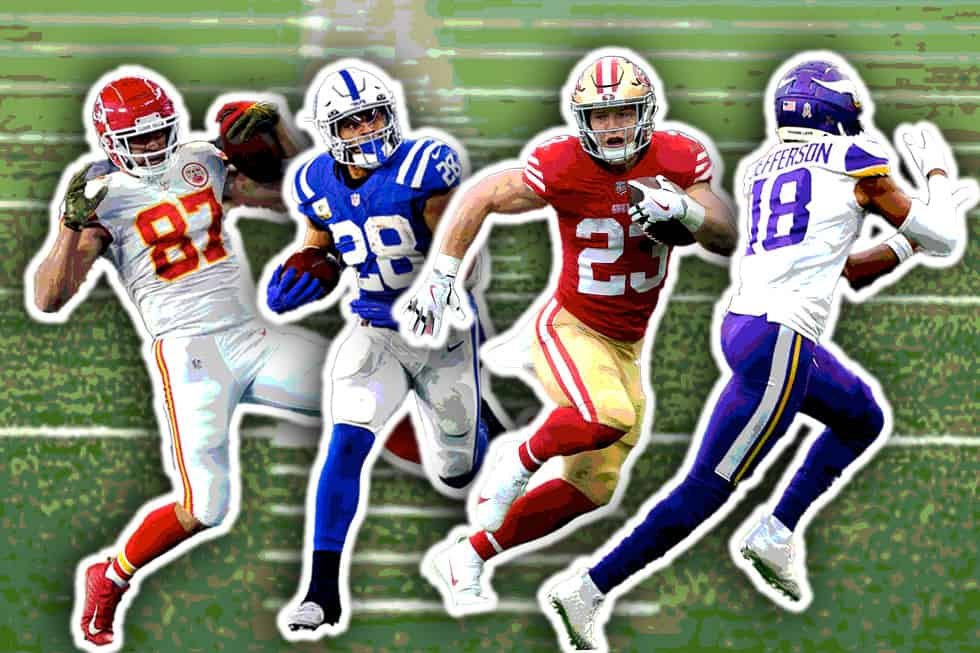
That moment your league commissioner announces the draft order. Do you feel a pang of dread, or a surge of excitement? For many, the pick number feels like fate, dictating their entire fantasy season. But here’s the secret: master your Fantasy Sports Draft Order Strategies, and you’ll find winning potential in any position.
Forget the myth that only the #1 pick guarantees glory. Every spot on the draft board offers unique advantages and challenges. The real champions aren't those who get lucky with the first pick, but those who arrive prepared, adaptable, and armed with a plan for any scenario.
At a Glance: Your Winning Draft Order Toolkit
- Every Pick is a Power Pick: Learn the specific advantages of early, middle, and late-round selections in a snake draft.
- Master the Format: Adapt your strategy for common snake drafts, dynamic auction leagues, and unique modified formats like third-round reversals.
- League Settings are King: Your approach must pivot based on scoring (PPR vs. Standard), league size (shallow vs. deep), and longevity (redraft vs. keeper/dynasty).
- Position Prioritization is Fluid: Understand when to grab elite RBs, savvy WRs, late-round QBs, or streaming TEs.
- Go Beyond Basic Rankings: Employ advanced tactics like tier-based drafting and the Zero-RB strategy.
- Prepare, Practice, Adapt: Mock drafts, cheat sheets, and in-draft flexibility are your ultimate weapons.
- Avoid Common Pitfalls: Don't reach for players, neglect depth, or draft a kicker too early.
The Draft Order Myth Busted: Every Pick is a Power Pick
The most common fantasy football format is the snake draft, where the picking order reverses each round (e.g., if you pick 1st in Round 1, you pick 12th in Round 2, then 1st in Round 3, and so on). This structure, designed for fairness, actually creates distinct strategic opportunities depending on where you land.
Before your league settles on a draft order, whether by a silly lottery or a random generator, understand that each position has its own unique path to building a championship roster. If your league uses a tool to generate a random draft order, make sure you're ready for any outcome.
Early Picks (1-3): Dominating the Top Tier
Landing one of the first three picks in a 12-team snake draft feels like hitting the jackpot, and for good reason. You're guaranteed one of the most elite, game-changing talents in the league—a true foundational piece for your roster.
The Advantage:
- Secure a Superstar: You get first dibs on a player who consistently performs at an unparalleled level, often a top-tier running back or wide receiver with predictable high volume and touchdown upside. Think of it as snagging a cornerstone that virtually every other manager desires.
- Set Your Team's Identity Early: Your first pick immediately signals your team’s direction. If you grab an elite RB, you're leaning into a strong run game. If it's a top WR, you're prioritizing consistent pass-catching points, especially in PPR leagues.
The Challenge: - Long Waits Between Picks: The flip side of picking first is that you'll wait the longest for your second pick. In a 12-team league, after your first pick, you won't select again until pick 2.12 (24th overall) and then 3.01 (25th overall). This "dead zone" requires patience and foresight.
- Anticipate Position Runs: While you're waiting, other managers will be drafting, and positional runs are inevitable. You need to predict which positions will be depleted before your next pick and adjust your targets accordingly.
Strategy for Early Picks: - Anchor RB or Elite WR: Prioritize a top-tier running back due to scarcity and high point production. Alternatively, an elite wide receiver in PPR formats offers similar security. Secure this foundational piece without hesitation.
- Targeting the Turn: Knowing you have back-to-back picks at the end of Round 2 and beginning of Round 3 is crucial. This "turn" is where you can "strategy stack" — grabbing two high-impact players who complement your first pick or address pressing needs. For example, if you took an RB first, you might target a strong WR and then another high-upside RB with your next two picks.
Middle Picks (4-8): The Flexible Core Builder
Drafting in the middle of the first round might not offer the immediate flash of a top-three pick, but it provides unparalleled flexibility and allows you to react to the draft as it unfolds. There's no inherent disadvantage to these spots; they simply demand a more adaptive mindset.
The Advantage:
- Value and Flexibility: You'll still get a strong player, but you'll have a slightly better idea of who's still on the board and what positions are being targeted by the managers picking before you. This allows you to grab the "best available" player with confidence, often finding a top-tier talent who slipped slightly.
- Strategic Reactions: Middle picks let you observe early runs on positions. If three running backs go in the first three picks, you can still grab an elite RB, or pivot to a top-tier WR if the value is there. This agility is a huge asset.
The Challenge: - No Obvious Path: Unlike early picks where you're almost forced into an RB or WR, middle picks often present multiple appealing options across positions. Deciding between a slightly lesser RB or a top-tier WR can be tough.
- Avoiding the Scramble: If a sudden run on a specific position happens just before your pick, you might feel pressured to reach. Resist this urge and stick to your tier-based rankings.
Strategy for Middle Picks: - Best Available Talent (Tier-Based): Focus on drafting the highest-valued player within your preferred tiers, regardless of position, unless one position is clearly being devalued or overvalued by your leaguemates.
- Balance and Diversity: Aim to build a balanced team. If you go RB in Round 1, look for a high-volume WR in Round 2, or vice versa, to ensure you're not overly reliant on one position early on.
Late Picks (9-12): The Double-Dip Dynamo
Drafting towards the end of the first round in a snake draft means you'll miss out on the absolute cream of the crop initially. However, these late picks offer a powerful strategic advantage: back-to-back selections. This allows for immediate strategy stacking and securing two top players to kick off your roster.
The Advantage:
- The Power of the Turn: Getting back-to-back picks (e.g., 1.12 and 2.01 in a 12-team league) is a unique opportunity. You essentially get two mini-first-round selections, allowing you to pair high-value players or grab two complementary pieces instantly.
- Addressing Needs Immediately: If you’re targeting a specific position that might get depleted by the time your pick rolls around in the next round, these back-to-back selections let you lock up your top two choices.
The Challenge: - Missing Out on Top-Tier Anchors: The most elite RBs and WRs will likely be gone by the time your first pick comes around. You’ll be selecting from the very top of the second tier.
- Staying Calm During Early Runs: Watch as the top players fly off the board. Don't panic. Trust your rankings and know that strong value will still be available at your turn.
Strategy for Late Picks: - Leverage Back-to-Back Picks: This is your defining advantage. You can target two high-impact players who might have slipped a bit, or you can secure two players from different positions to build a strong foundation (e.g., an RB and a WR).
- Consider a Strong RB/WR Combo: Since you’re picking at the end of the round, you might find an RB who barely missed the elite tier and pair him with a high-upside WR, or vice-versa.
- Look for Falling Stars: Sometimes, a top-tier player might unexpectedly fall due to other managers’ preferences or reaches. Your turn is the perfect spot to capitalize on these slips.
Beyond the Snake: Mastering Different Draft Formats
While snake drafts dominate the fantasy landscape, being prepared for other formats is a mark of a truly seasoned player. Each brings its own strategic nuances.
Auction Drafts: True Roster Control (with a Budget)
Auction drafts throw the concept of fixed draft order out the window, offering the ultimate freedom – and requiring ultimate strategic acumen. Instead of taking turns, managers bid on players from a fixed budget, usually $200.
How it Works: Players are nominated, and managers bid until one wins. This continues until all roster spots are filled.
Strategy for Auction Drafts:
- Budget Allocation is King: Before the draft, decide how much you're willing to spend on elite players, mid-tier starters, and depth. A common approach is "Stars and Scrubs" (heavy spending on a few superstars, then cheap depth) or a "Balanced" approach (spreading your budget across solid starters).
- Identifying Undervalued Gems: Watch for players who slip through the cracks, often due to opponents overspending on early nominations. These are your budget-friendly starters.
- Nomination Strategy: Don't just nominate players you want. Nominate players you think others will overpay for, or nominate backups to drain opponents' budgets early.
- Protect Your Bids: Be willing to overpay slightly for a player you truly want, but know when to drop out of a bidding war. Conserving budget for the later rounds is critical for roster depth.
- Always Have a Backup Plan: If you miss out on your top target, know who your next several options are and what their projected price range will be.
Modified Draft Styles: Expect the Unexpected
Some leagues introduce twists to the standard snake format to inject more strategy or perceived fairness.
- Linear Drafts: The pick order remains the same in every round (e.g., 1, 2, 3... 12, then 1, 2, 3... 12 again). This heavily favors early picks, making it easier to stack elite talent. If you have an early pick, aggressively target top-tier players in the first few rounds. If you have a late pick, focus on finding value in players who might fall a bit further.
- Third-Round Reversal: After the second round, the draft order reverses again. So, if you picked 1st in Round 1, 12th in Round 2, you'd pick 12th again in Round 3, then 1st in Round 4. This system aims to balance the advantage of the top picks by giving those at the end of Round 1 a second set of back-to-back picks in Rounds 2 and 3.
Adapting to Modified Drafts: - Understand the "Why": These formats are designed to shift value. Linear drafts amplify early pick advantages, while reversals attempt to diminish them.
- Re-evaluate Your Turn Strategy: For a third-round reversal, the manager with the 1.01 pick essentially has three consecutive picks in rounds 1, 2, and 3 (1.01, 2.12, 3.12). This makes the first pick even more powerful. Plan for these clusters of picks to maximize impact.
- Mock Drafts are Essential: There’s no better way to understand the unique flow of a modified draft than by running a few mock drafts in that specific format.
The League Blueprint: Adapting to Your Ecosystem
A common mistake among fantasy players is applying a one-size-fits-all strategy. A championship-caliber draft strategy isn't just about your pick number; it's deeply intertwined with your league's specific settings.
Scoring System Shapes Strategy
The way your league awards points fundamentally changes player values.
- Standard Scoring: This traditional format primarily rewards touchdowns and yardage.
- Impact: Running backs who get a lot of goal-line carries and quarterbacks who throw many touchdowns see a boost in value. High-volume pass-catching running backs and wide receivers might be slightly devalued if they don't reach the end zone often.
- Strategy: Prioritize touchdown-dependent players, especially bell-cow RBs and top QBs.
- PPR (Points Per Reception) Scoring: Players earn points for every reception. This is often 1 point per reception (full PPR) or 0.5 points (half PPR).
- Impact: This system significantly boosts the value of wide receivers, tight ends, and pass-catching running backs. A player who catches 10 passes for 50 yards (10 points in full PPR) might outscore another who rushes for 100 yards but only catches 2 passes (2 points in full PPR).
- Strategy: Target high-volume pass-catchers earlier. The Zero-RB strategy can be particularly effective here, as you can load up on elite WRs and then find value RBs later who still get receptions.
- Superflex / 2-QB Leagues: These leagues allow (Superflex) or require (2-QB) you to start a second quarterback in a flex spot.
- Impact: Quarterback value skyrockets. What was once a late-round position becomes a priority, often pushing QBs into the first few rounds.
- Strategy: You'll need to draft at least two starting QBs, and potentially a third for depth. Target your first QB significantly earlier than in a standard league, often in Round 1 or 2, depending on your draft position and the value available.
League Size Matters: Shallow vs. Deep Roster Construction
The number of teams in your league directly impacts player availability and, therefore, your drafting priorities.
- Shallow Leagues (8-10 Teams):
- Impact: There's an abundance of talent. Even players drafted in the later rounds will be viable starters, and the waiver wire will be rich with options.
- Strategy: Focus on building an all-star starting lineup. Don't worry as much about depth; prioritize high-ceiling players for your core positions. You can take more risks on boom-or-bust players, knowing reliable options will be available later or on waivers.
- Deep Leagues (12+ Teams):
- Impact: Talent quickly thins out. Every roster spot matters, and the waiver wire becomes a barren wasteland.
- Strategy: Prioritize overall roster depth and high-upside backups. You need players who can step in if starters get injured or underperform. Handcuffing (drafting a high-usage RB's backup) becomes more crucial. Look for players with defined roles or clear paths to increased opportunity.
Long-Term Vision: Keeper & Dynasty Leagues
These formats go beyond a single season, asking you to build a roster for the long haul.
- Keeper Leagues: You get to "keep" a certain number of players from your previous year's roster, often at a reduced draft cost or specific round penalty.
- Impact: The draft pool is diminished as top players are kept. Rookie and young players gain value if their keeper cost is low.
- Strategy: When drafting, consider not just immediate production but also a player's potential for future keeper value. Drafting a talented rookie late who could explode next year is a smart move.
- Dynasty Leagues: You keep your entire roster year-to-year, only drafting rookies and waiver wire pickups.
- Impact: Youth and long-term potential become paramount. Veterans with depreciating value are less appealing.
- Strategy: Focus heavily on drafting young players and rookies with breakout potential. You're building a franchise, not just a one-year team. Player age and injury history play a much larger role.
Positional Playbook: Who to Target When
The question isn't "should I draft an RB or WR?" it's "which tier of RB or WR is available, and what value do they offer compared to other positions right now?"
Running Backs: The Foundation of Fantasy
- Why Prioritize RBs: Elite running backs are scarce and typically offer the highest weekly scoring upside, particularly in standard leagues. They touch the ball frequently and are often the primary source of touchdowns.
- When to Draft: Secure elite RBs early, often in the first two rounds. Many successful teams build around 2-3 strong RBs.
- Handcuffing: For your top RBs, consider drafting their backups (handcuffs) in later rounds. This provides crucial injury protection and preserves your significant investment. If your star RB goes down, you already own their replacement.
Wide Receivers: Consistent Scoring Machines
- Why They're Crucial: WRs offer consistent scoring, especially in PPR leagues, where high-volume pass-catchers can rack up points even without touchdowns.
- When to Draft: Target elite WRs in the late first or early second round, particularly after a run on top RBs. Seek mid-round sleeper WR2s/WR3s who have high-target shares or are in ascending offenses.
- PPR Boost: In PPR, the value of WRs often equals or surpasses RBs, making a "Zero-RB" or "Hero-RB" strategy (one elite RB, then WRs) very viable.
Quarterbacks: The Value Proposition
- Often Deep: In standard 1-QB leagues, the quarterback position is deep. There are usually 10-12 QBs capable of putting up similar fantasy points, meaning waiting on the position is often a savvy move.
- When to Draft: Consider drafting high-value QBs (e.g., Kirk Cousins, Geno Smith, or others outside the top 5-6) in later rounds (7-10+). The difference between the #5 QB and the #10 QB is often less impactful than the difference between the #5 RB and #10 RB.
- Exceptions: In dual-QB or Superflex leagues, quarterback scarcity dictates drafting QBs significantly earlier, often in the first few rounds.
Tight Ends: The Elite Few & The Streamers
- Limited Elite Options: There are typically only a handful of truly elite tight ends (e.g., Travis Kelce, Mark Andrews) who consistently produce like high-end WRs.
- When to Draft: If you don't snag one of these rare talents early (often Round 1-3), it's generally best to wait.
- "Streaming" or Late-Round Gems: If you miss the top tier, consider "streaming" the position weekly based on favorable matchups or targeting mid-to-late-round tight ends with high-upside potential or new roles. The difference between the #5 and #15 TE is often negligible, making a late-round gamble or consistent waiver wire pickups a solid strategy.
Defense & Kickers: Last Picks, Last Worries
- Unpredictability: These positions are highly volatile and unpredictable. Their weekly output can swing wildly based on matchups, turnovers, and random occurrences.
- When to Draft: Draft your team defense and kicker in the final two rounds of your draft. Do not waste valuable early-to-mid-round picks on them. There's almost always a viable option available, and they are often streamable from the waiver wire based on matchups.
Advanced Strategies: Playing Chess, Not Checkers
To truly win your league, you need to think beyond simple draft rankings. These advanced strategies allow you to extract maximum value from every pick.
Tier-Based Drafting: Maximize Value, Avoid Reaching
This is arguably the most powerful strategy for any draft format. Instead of rigidly following a sequential ranking (e.g., player #1, then #2), you group players by similar value tiers.
How it Works:
- Create Tiers: Group players into tiers based on projected fantasy points or perceived talent level. For example, "Tier 1 RBs: Absolute Elites," "Tier 2 RBs: High-End Starters," "Tier 3 RBs: Solid Starters with Upside." Do this for all positions.
- Draft from the Highest Available Tier: When it's your turn, look at your tiers. Which position has the highest-valued player still available within their respective tier? Draft that player.
- Prioritize Scarce Positions: If you have an equal-value player in Tier 2 RB and Tier 1 WR, and you know there are still several other Tier 1 WRs available but only one Tier 2 RB left, you might prioritize the RB due to scarcity.
- Avoid Reaching: This system prevents you from "reaching" for a player simply because they are the next one on a linear list. If all the Tier 1 RBs are gone, don't draft a Tier 2 RB ahead of a Tier 1 WR just to get an RB. Instead, take the Tier 1 WR, knowing you'll still get a Tier 2 RB later.
Zero-RB Strategy: Bold Moves, Big Rewards (or Risks)
The Zero-RB strategy involves intentionally avoiding running backs in the early rounds (typically the first 3-5 rounds) to stock up on elite wide receivers, quarterbacks, and tight ends. You then target high-upside, value RBs in the later rounds.
How it Works:
- Stock Up on WRs/QBs/TEs: Dedicate your early picks to securing a dominant group of pass-catchers and potentially an elite QB or TE.
- Later-Round RB Targets: In the mid-to-late rounds, look for RBs who have:
- High Pass-Catching Volume: Especially effective in PPR leagues.
- High-Upside Backups: Handcuffs to potentially injured starters.
- Committee Backs with Defined Roles: Even if they don't get all the carries, they might get enough for fantasy relevance.
- Players in New Situations: Rookies or free agents who could see an expanded role.
- Risks: This strategy can be boom-or-bust. If your late-round RBs don't pan out, your team might struggle for consistent production.
- Effectiveness: Particularly strong in PPR leagues where the value of pass-catchers is amplified. It can also be very effective if there's an early "run" on RBs, leaving elite WRs available in the mid-to-late first round.
Roster Construction Philosophies: Balanced vs. Risk-Heavy
How you build your team can reflect your risk tolerance and confidence in your scouting.
- Balanced Team: Mixes high-ceiling players (those with huge upside but potentially lower floor) with safe-floor players (consistent, reliable, but perhaps not league-winning). This approach minimizes weekly volatility.
- Risk-Heavy (Boom-or-Bust) Roster: Focuses on high-upside players, often younger, unproven talents, or those returning from injury with huge potential. This strategy aims for a massive weekly score but carries the risk of a low floor if those gambles don't pay off. This is more common in shallow leagues where waiver wire options are plentiful if risks fail.
The Data Don't Lie: Optimal First-Pick Strategies (12-Team PPR/Flex)
Sometimes, the best strategy is backed by hard numbers. Analysis of thousands of recent 12-team PPR/Flex mock drafts has projected the fantasy points per week (FP/Wk) for various positional strategies when drafting from the first overall spot. While every draft is unique, this data offers a valuable starting point.
Here are some of the top-performing positional strategies for the first three rounds:
- RB | TE | RB: Projected 105.1 FP/Wk
- Why it works: Securing an elite anchor RB, then a top-tier TE (like Travis Kelce or Mark Andrews) who provides a significant positional advantage, followed by another high-upside RB for depth or a strong second starter.
- RB | TE | WR: Projected 104.2 FP/Wk
- Why it works: Similar to above, but instead of a second RB, you grab a strong WR, ensuring you have a top player at three different positions. This is great for balance.
- RB | RB | TE: Projected 104.2 FP/Wk
- Why it works: Prioritizes a strong running game and positional advantage at TE. Two strong RBs give you a weekly floor, while an elite TE boosts your scoring.
- RB | WR | RB: Projected 104.1 FP/Wk
- Why it works: A classic balanced approach: one elite RB, a high-volume WR, and another solid RB to ensure depth and cover for bye weeks or injuries.
- RB | RB | QB: Projected 104.1 FP/Wk
- Why it works: This strategy is riskier in 1-QB leagues but can pay off if you snag an elite QB who consistently outscores his peers significantly, paired with two strong RBs.
- RB | RB | WR: Projected 103.9 FP/Wk
- Why it works: Focuses on a powerful run game foundation with two strong RBs, then adds a solid WR to diversify your scoring.
- RB | WR | TE: Projected 103.9 FP/Wk
- Why it works: Highly balanced, securing an elite player at RB, WR, and TE early on, minimizing weaknesses across multiple key positions.
Less Effective Strategies (Lowest Projections): - WR | WR | RB: Projected 102.0 FP/Wk (suggests waiting on RB too long for the 1.01 pick can hurt)
- WR | WR | WR: Projected 101.5 FP/Wk (over-prioritizing WRs early, even in PPR, can lead to a significant drop-off at other positions)
Actionable Insight: While this data provides compelling insights, remember it’s a guide, not gospel. The draft board is dynamic. Stay flexible and adapt to your league mates' choices. If an elite player falls due to an unexpected run, snatch them up, even if it deviates from your initial plan.
Draft Day Mastery: Pitfalls and Preparation
Your fantasy draft isn't just about strategy; it's about execution. Being prepared and flexible on draft day can make all the difference.
Pre-Draft Prep is Non-Negotiable
- Mock Drafts, Mock Drafts, Mock Drafts: Seriously, run several. Experiment with different draft positions and strategies. This helps you understand player availability (ADP – Average Draft Position), test your tiered rankings, and practice reacting to positional runs. It's your scrimmage before the big game.
- Tailored Cheat Sheets: Don't just copy a generic ranking list. Customize your cheat sheet to your league's specific scoring (PPR, Superflex, etc.), roster size, and even the tendencies of your leaguemates (e.g., "Uncle Bob always drafts the local team's QB too early"). Tier players instead of just listing them linearly.
- Understand League Settings Inside Out: Confirm scoring, roster spots, waiver wire rules, and any unique league quirks. Ignorance here is not bliss; it’s a recipe for disaster.
Reading the Room: Adapting on the Fly
A static draft plan is a broken draft plan. You need to be a fantasy sports detective during the draft itself.
- Observe Opponent's Patterns: Is there a "run" on running backs? Are your leaguemates suddenly drafting QBs much earlier than expected? This information is gold.
- Capitalize on Reaches: If an opponent reaches for a player significantly above their ADP or tier, don't follow suit. Instead, pivot and grab the high-value player who just fell to you. Their mistake becomes your gain.
- Don't Panic During Runs: If everyone else is drafting RBs and your board indicates the best value is a WR, stick to your tiers. You might end up with an incredibly strong receiving corps while others depleted their RB depth too soon.
Common Mistakes to Sidestep
- Reaching for Players Too Early: Drafting a player significantly above their ADP or their tier simply because you "really want them" is a rookie mistake. It means you're passing on better value.
- Neglecting Roster Depth: Especially in deeper leagues (12+ teams), ignoring your bench is a huge error. Injuries happen, and bye weeks force tough decisions. A deep bench provides insurance and flexibility.
- Drafting QBs or TEs Prematurely: In standard 1-QB leagues, the position is often deep enough to wait. Grabbing a QB in Round 4 when an elite RB or WR is still available is usually poor value.
- Ignoring Bye Weeks (During the Draft): While not critical for your absolute top picks, it’s worth being aware of bye week clusters for your mid-to-late-round players. Drafting too many starters with the same bye week can create a massive headache mid-season.
- Drafting Favorite Team Players (Blindly): It's fun to cheer for your guys, but don't let bias override objective value. Only draft players from your favorite team if they are objectively the best available option according to your rankings.
Flexibility is Your Superpower
Ultimately, the best strategy is no strategy—it's adaptability. Your pre-draft plan is a map, not a railroad track. Be willing to deviate from conventional wisdom, react to the flow of the draft, and trust your instincts when value presents itself. The draft is a conversation, and you need to be ready to respond.
Your Burning Questions Answered: Fantasy Draft FAQs
Still have lingering questions about how to ace your draft? Here are quick answers to common fantasy draft order queries.
Q: What's the most common fantasy draft format?
A: The snake draft, where the pick order reverses each round.
Q: What's the best strategy if I have the first overall pick?
A: Secure a game-changing elite RB or WR. Prioritize scarcity and consistent high-volume production.
Q: Do middle picks (4-8) have a disadvantage?
A: No, they offer balance and allow you to react strategically to player runs, finding excellent value.
Q: How should I approach late-round picks (9-12)?
A: Leverage your back-to-back picks at the "turn" to secure two high-impact or complementary players.
Q: How do I handle an auction draft?
A: Spend strategically on stars, but ensure you leave enough budget for depth and identifying undervalued players in later bidding.
Q: What's the typical positional draft order?
A: Generally, prioritize best available talent within tiers. RBs are often targeted early due to scarcity, followed by WRs for stable scoring (especially in PPR).
Q: When should I draft quarterbacks (QBs)?
A: Late in standard 1-QB drafts (rounds 7-10+). Prioritize QBs much earlier in two-QB or Superflex leagues.
Q: How do different scoring systems affect strategy?
A: PPR (Points Per Reception) significantly boosts the value of pass-catchers (WRs, TEs, pass-catching RBs). Standard scoring favors touchdown-heavy playmakers.
Q: What is tier-based drafting?
A: Grouping players by similar value tiers rather than strict linear rankings. Draft from the highest available tier, prioritizing positions of need, to maximize value and avoid reaching.
Q: Is the Zero-RB strategy effective?
A: It can be, especially in PPR, by stocking elite WRs and QBs, then targeting RB depth later. However, it carries inherent risks.
Q: Should I skip drafting an early tight end (TE)?
A: Yes, unless you're targeting one of the very few elite TEs. Otherwise, it's often better to "stream" the position weekly or find a mid-to-late-round gem.
Q: How does league size affect my draft strategy?
A: In shallow leagues (8-10 teams), focus on an all-star starting lineup. In deep leagues (12+ teams), prioritize overall roster depth and high-upside backups.
Q: What are "handcuff players" and should I draft them?
A: Handcuffs are backup running backs for your high-usage RBs. Yes, draft them in later rounds for injury insurance, especially in deeper leagues.
Q: How important are bye weeks during the draft?
A: Not critical in the early rounds; focus on best available talent. Be mindful of not drafting too many starters with the same bye week in later rounds. Gaps can often be managed via waivers.
Q: What's the strategy for drafting from the "turn"?
A: Leverage the back-to-back picks to pair high-value players, avoid reaching, and consider positional scarcity.
Q: What is a third-round reversal?
A: A draft format where the order switches again after Round 2 (e.g., 1.01, 2.12, 3.12, 4.01). It balances the advantage of the top pick.
Q: Is "stacking" players (e.g., QB + WR from the same team) a good idea?
A: Team stacks can amplify scoring but also increase risk if that team has an off-game. Strategize based on league size and overall roster construction.
Q: How do I identify "sleeper" players?
A: Look for players undervalued due to injury history (who are now healthy), team changes (new coach, new role), or breakout potential (rookies, increased opportunity).
Q: When should I draft defense and kickers?
A: Always in the final two rounds due to their scoring unpredictability and availability on the waiver wire.
Q: What if there's an early running back "run"?
A: Stay calm. Stick to your tiered rankings. If the value isn't there at RB, pivot to high-value WRs or TEs.
Q: Do young players have an advantage?
A: Yes, they offer breakout potential and are ideal for long-term formats like dynasty or keeper leagues due to their longevity.
Q: Should I draft players from my favorite NFL team?
A: Only if they are objectively the best available option according to your draft rankings. Don't let bias cloud your judgment.
Q: How much should I trust pre-season performance?
A: Pre-season provides clues on player roles and usage, but don't overvalue small sample sizes or impressive stats against backups. Look for consistent opportunity, not just highlights.
Q: How do I adapt if my initial draft plans fail?
A: Stay flexible and refer to your tiered rankings. Pivot to the next best available player or strategy based on how your leaguemates are drafting.
Q: How do league format changes (e.g., Keeper vs. Redraft) affect strategy?
A: Keeper/dynasty leagues prioritize long-term potential and youth, while redraft leagues focus solely on immediate production for the current season.
Q: Should I draft injured players?
A: For elite talents expected back early in the season from minor injuries, they can be great value picks if they fall in the draft. Avoid players with season-ending or major, lingering injuries unless you're in a dynasty league and can stash them.
Q: What's the difference between balancing my roster and taking stacking risks?
A: Balancing involves mixing high-ceiling players with safe-floor consistency. Stacking is a high-upside, boom-or-bust approach, often tying multiple players to one team's performance.
Q: How do mock drafts help me improve?
A: They help you test strategies, understand average draft position (ADP), practice reacting to runs, and gain confidence in your decision-making.
The fantasy sports draft is not a game of chance where your pick number seals your fate. It’s a strategic battle, a puzzle to be solved. By understanding the nuances of different draft positions, formats, and league settings, and by employing savvy strategies like tier-based drafting and the Zero-RB approach, you empower yourself to build a championship roster from any spot on the board.
Arm yourself with preparation, stay adaptable on draft day, and always look for value. The most prepared manager, not necessarily the one with the first pick, is the one who lifts the trophy. Now go win your league!