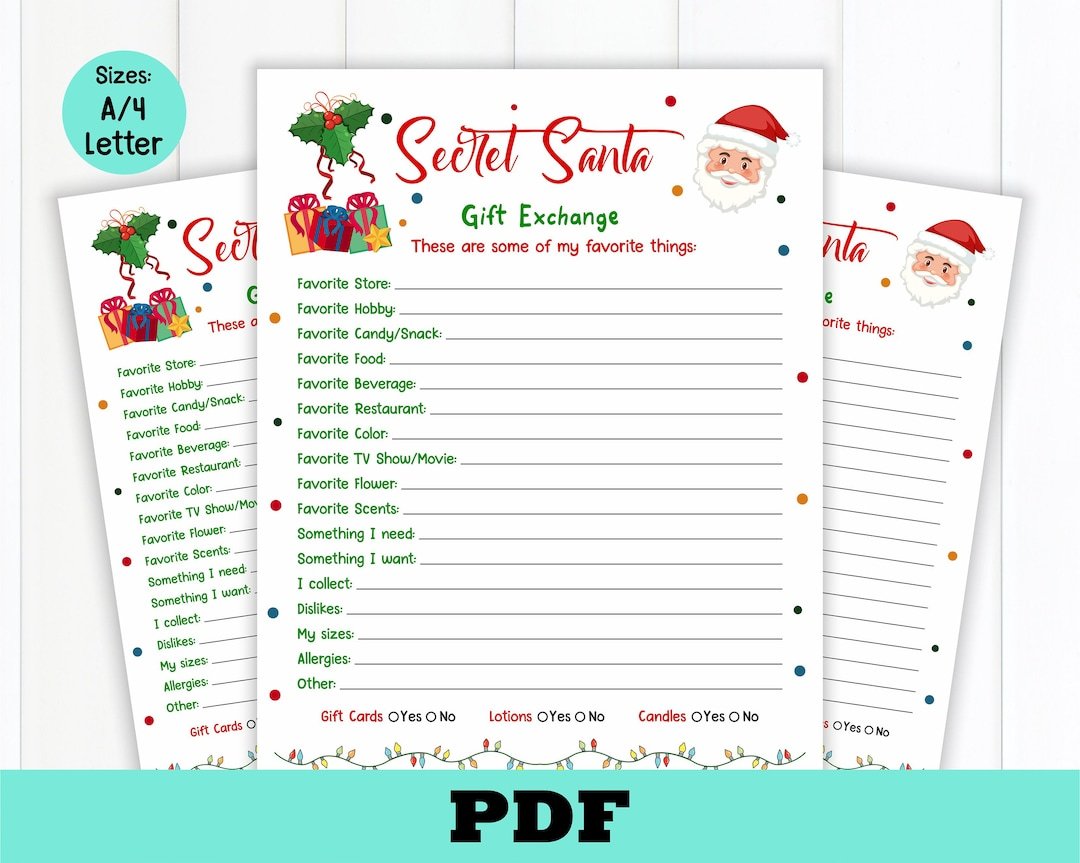
Organizing a holiday gift exchange or a Secret Santa game often starts with good intentions, then quickly devolves into a flurry of crumpled papers, awkward re-draws, and whispered debates about who shouldn't draw whom. It's a classic holiday stressor, right up there with untangling fairy lights. But what if there was a way to make the draw itself utterly foolproof, perfectly fair, and completely stress-free? Enter Gift Exchange & Secret Santa Randomizers—digital tools designed to manage the nitty-gritty so you can focus on the fun.
These online randomizers take the hassle out of assigning gift givers and receivers, ensuring everyone gets a fair match, respecting any "no-match" rules, and even automating budget notifications. No more fumbling with hats and slips of paper; just pure, randomized efficiency.
At a Glance: Key Takeaways
- Effortless Assignments: Generate fair Secret Santa or gift exchange pairings instantly.
- Smart Exclusions: Prevent specific individuals (e.g., spouses, family members from the same household) from drawing each other.
- Budget Management: Automatically split and assign budget reminders to participants.
- Flexible Outputs: Get instant on-screen results, printable sheets, or even email templates.
- Free & Private: Most quality randomizers don't require accounts and keep your participant data secure.
- Peace of Mind: Eliminate draw-day drama and ensure every participant gives and receives a gift.
The Old Way vs. The Better Way: Why Digital Randomizers Win
Think back to your last manual gift exchange draw. Someone invariably pulls their spouse's name, or worse, draws their own. Then there's the inevitable "Can I just trade with someone?" request, leading to a cascade of re-draws that seem anything but random. For larger groups, or those with complex family dynamics, this manual process becomes a logistical nightmare.
This is precisely where a dedicated gift exchange randomizer shines. It's not just about speed; it's about guarantees. These tools ensure:
- True Randomization: Every participant has an equal chance of drawing any valid recipient.
- Constraint Adherence: Crucial "don't draw each other" rules are strictly enforced.
- No Self-Draws: You’ll never draw your own name.
- Everyone Participates: Each person gives one gift and receives one gift.
- Simplicity: The organizer's job is reduced to a few clicks.
From office Secret Santas to sprawling family reunions, these digital assistants transform a potential headache into a seamless experience. They bring the same kind of organizational power you might find useful to create a random draft order for a fantasy sports league, but tailored specifically for gift-giving.
Getting Started: A Step-by-Step Guide to Using a Gift Exchange Randomizer
Most online gift exchange randomizers follow a remarkably similar, user-friendly process. Here's how you'll typically navigate the setup, ensuring a smooth draw every time.
Step 1: Compile Your Participant List
This is your foundation. Start by listing everyone who will be part of the gift exchange.
- Format: One person per line. It's that simple.
- Clarity: Use clear, identifiable names. If you have two "Chris's," consider adding a last initial or full name.
- Example:
Alice
Bob
Charlie
Dana
Step 2: Add Exclusions and Household Tags (The Game-Changer)
This is the feature that truly elevates digital randomizers above the "hat method." It prevents awkward or inappropriate pairings.
- Exclusions: If Bob absolutely cannot draw Alice (maybe they exchanged gifts last year, or have a running gag), you can typically specify this. Some tools let you list exclusions next to the name, like
Bob (no Alice), while others have a dedicated exclusion matrix. - Household Tags: This is a lifesaver for family exchanges. By tagging individuals who live together, the randomizer ensures no one within the same household draws another person from that household.
- How to Use: Simply add a tag in parentheses after their name.
- Example:
Alice (Household A)
Bob (Household A)
Charlie (Household B)
Dana (Household B) - Benefit: In this example, Alice will not draw Bob, and Bob will not draw Alice. Similarly for Charlie and Dana. This ensures a wider, more interesting circle of giving, keeping the mystery alive and preventing gift-sharing among those who already share everything!
Step 3: Define Your Budget (Optional, But Recommended)
A budget keeps things fair and prevents anyone from feeling overwhelmed or undervalued. Randomizers can often incorporate this.
- Per-Person Budget: This is the most common. You set a fixed amount (e.g., "$25") that everyone should spend on their assigned recipient.
- Total Budget: Less common for individual exchanges, but some tools might allow a total budget if you're assigning contributions to a larger group gift.
- Automation: The tool doesn't enforce spending, but it can include the budget amount directly in the assignment notification for clarity.
Step 4: Include Email Addresses for Automated Distribution (Optional)
This feature saves organizers a tremendous amount of post-draw work.
- Format: Add the email address in angle brackets
< >directly after the participant's name. - Example:
Alice alice@example.com
Bob bob@example.com
Charlie charlie@example.com - Benefit: If you enable the email option, the randomizer will automatically send each participant their assignment directly to their inbox. This is especially useful for remote groups or busy organizers. It eliminates the need to manually copy and paste assignments into individual emails or messages.
Step 5: Generate Multiple Unique Lists (For Backups or Separate Exchanges)
This advanced option offers flexibility for complex scenarios.
- Purpose: If you need a backup set of pairings just in case, or if you're organizing multiple separate gift exchanges for the same group (e.g., a "nice gift" exchange and a "gag gift" exchange), this feature is invaluable.
- How it Works: The randomizer will generate completely different, independent sets of assignments based on your initial participant list and constraints. You might choose to generate "up to 10" unique lists.
- Crucial Note: These are unique lists. If you generate two, List A will have different pairings than List B. You'll only use one for your actual exchange.
Step 6: Generate Pairings/Assignments
With all your parameters set, one click is all it takes!
- The randomizer processes your input, applies the randomization algorithm, and enforces all your specified constraints (exclusions, households).
- In moments, you'll have your perfectly fair, stress-free gift exchange assignments ready to go.
Unpacking Key Features: What Makes These Tools So Powerful?
Beyond the basic steps, understanding the core capabilities of gift exchange randomizers reveals why they've become indispensable for event organizers.
True Randomization with Constraint Respect
At its heart, a randomizer is an algorithm. But it's not just blindly random. The best tools employ sophisticated logic to ensure:
- Fairness: Every eligible participant has an equal statistical chance of being drawn.
- Rule Enforcement: Your carefully input exclusions and household tags aren't just suggestions; they're hard rules the algorithm must follow. This means you can truly set it and forget it, confident that no awkward pairings will slip through.
Automated Budget Splits
While the randomizer won't buy the gifts for you, it integrates the budget seamlessly into the assignment process. When pairings are generated, the specified budget amount is typically included alongside the recipient's name. This eliminates any confusion and sets clear expectations for spending.
Guarantees Each Person Gives and Receives
This might seem obvious, but it's a critical guarantee. Manual draws are prone to errors where someone is left out, or two people draw each other and the chain breaks. Digital randomizers create a closed loop: every giver is a receiver, and every receiver has a giver.
Free to Use, No Account Required
Many of the best gift exchange randomizers operate on a freemium model or are simply provided as a public service. This means:
- No Cost: You won't incur charges for basic use.
- No Sign-Ups: Often, you don't need to create an account, which protects your privacy and simplifies the process. Just visit the site, enter your data, and go.
- Data Security: Without accounts, there's less personal data stored long-term, which is a significant privacy advantage.
Output Options: Sharing Your Assignments with Ease
Once the pairings are generated, how do you get them to your participants? Randomizers offer several flexible output formats to suit any group size or preference.
Instant Pairings (On-Screen)
The most immediate result is an on-screen display of the assignments. This is perfect for:
- Small, present groups: If everyone is gathered, you can announce them or have participants check the screen.
- Organizer review: Before distributing, you can quickly scan the list to ensure everything looks correct.
CSV Export (Data for Your Records)
For organizers who like to keep detailed records or manage large events, a Comma Separated Values (CSV) export is invaluable.
- Columns: Typically includes "Giver," "Recipient," "Budget," and "Occasion" (if specified).
- Utility: You can open this file in spreadsheet software (like Excel, Google Sheets) to sort, filter, or integrate with other event planning documents. It's a great backup and an efficient way to transfer data.
Printable Assignment Sheets
Some people prefer a physical copy, especially for groups that aren't tech-savvy or for attaching to a physical invitation.
- Individualized Sheets: Often, the tool will generate separate sheets, each with one participant's name and their assigned recipient.
- Privacy: This allows you to hand out individual assignments privately.
Individualized Email Templates for Organizers
If you opted to include email addresses in Step 4, this is where that investment pays off.
- Automated Distribution: The randomizer can send emails directly to each participant, containing their assigned recipient and any relevant details (like the budget).
- Customizable: Often, you can add a personalized message from the organizer to set the tone for the exchange.
- Efficiency: This is the most hands-off distribution method for the organizer, saving significant time for larger groups.
Actionable Insights & Best Practices for a Flawless Draw
Even with the smartest randomizer, a few proactive steps can make your gift exchange truly seamless. Think of these as insider tips from a seasoned event planner.
Always Confirm Assignments Before Distribution
Before you hit "send all emails" or print dozens of sheets, take a moment to review the generated pairings.
- Why: While the algorithm is robust, a simple typo in a name or an overlooked exclusion detail can lead to issues. A quick scan can catch these human errors.
- What to Look For: Check for any pairings that feel wrong, given your group's dynamics, even if you thought you set exclusions correctly.
For Larger Groups, Test the Generator Once
If you're organizing an exchange for 20, 50, or even 100+ people, and especially if you have numerous complex exclusions, do a quick test run.
- How: Input a simplified version of your list and rules, or just a subset, and generate.
- Purpose: This helps you confirm that your exclusion formatting (e.g., household tags) works exactly as intended before you put in all the participant details. It's like a dry run to ensure your rules are interpreted correctly by the tool. This practice is similar to double-checking any complex randomization task, like when you need to create a random draft order for a high-stakes draft.
Use Household Labels Consistently
This cannot be stressed enough for family or cohabiting groups.
- Consistency is Key: Ensure everyone in the same household has the exact same label in parentheses after their name. E.g.,
Sarah (Smith Household)andJohn (Smith Household). - Enable the Option: Don't forget to check the corresponding "prevent household matches" option within the randomizer settings. If you just add the labels but don't activate the feature, they won't work.
Add Email Addresses and Enable the Email Option
If remote distribution is an option, leverage it fully.
- Angle Brackets: Remember the
<email@domain.com>format immediately after the name. - Check the Box: Many tools have a checkbox to enable email sending. Make sure it's selected.
- Pre-Communication: Inform participants that an email will be coming from the randomizer tool (or a specific email address) so it doesn't get lost in spam or mistaken for phishing.
Understand "Unique Lists" for Backups or Multiple Exchanges
Don't confuse generating multiple unique lists with needing multiple assignments for a single event.
- Backup: Generate 2-3 unique lists. If for some reason your primary list becomes unusable (e.g., someone drops out last minute, and you can't easily regenerate), you have a pre-made alternative.
- Separate Events: Use this if your group is doing, for example, a "funny gift" exchange and a "nice gift" exchange, and you want different pairings for each. You would generate two unique lists and assign one to each event. Do not use a different list from the same generation for people who already drew from the first list, as this can lead to confusion and unintended pairings.
Common Questions and Misconceptions About Randomizers
Even with their simplicity, a few questions frequently arise. Let's tackle them head-on.
"Is it really fair? How do I know it's truly random?"
This is a valid concern, especially if you've been burned by manual draws. Reputable online randomizers use cryptographic randomness or robust pseudo-random number generators (PRNGs) to ensure fairness. This means:
- Unpredictable: The outcome isn't biased or predictable.
- Equal Probability: Every eligible person has an equal chance of drawing any other eligible person.
- No Human Interference: Unlike drawing names from a hat where a person might unconsciously shuffle more or less vigorously, the algorithm is impartial.
If you're skeptical, test it yourself with a small group. You'll quickly see the results are genuinely random within your specified constraints.
"Is my data safe? What about privacy?"
This is paramount. High-quality randomizers prioritize user privacy.
- No Accounts = Less Data: As mentioned, many tools don't require account creation, meaning they don't store your personal information (like email addresses or participant names) long-term. Your data is processed for the generation and then typically purged.
- Temporary Processing: The data you input is generally used only for the purpose of generating the pairings and, if opted in, sending the emails. It's not sold, shared, or retained for marketing.
- Look for Clear Privacy Policies: If you're concerned, quickly check the website's privacy policy (usually linked in the footer) for explicit statements about data handling.
"What if someone drops out after assignments are made?"
This happens! Life gets in the way.
- Minor Changes (1-2 people): If only one or two people drop out, the easiest solution might be to manually adjust. If Giver A was supposed to give to Recipient B, and Recipient B drops out, Giver A can be reassigned to Recipient C (who now needs a giver). You'll need to communicate this change clearly.
- Major Changes (Many people): If several people drop out, or the group size significantly changes, it's often simpler to regenerate the entire list. This ensures all new constraints are honored and re-establishes a clean, random cycle. Just be sure to communicate to everyone that a new draw has occurred.
"Can I use this for a White Elephant or Gag Gift exchange?"
Yes, but with a slight distinction.
- Direct Assignment: These randomizers are primarily for direct assignment Secret Santa or gift exchanges, where Person A gives a gift specifically to Person B.
- White Elephant: White elephant (or Yankee swap) games involve gifts being brought anonymously and then "stolen" or chosen in a random order. While you could use a randomizer to assign the picking order for a white elephant game (much like you would create a random draft order for other events), it won't manage the actual gift-swapping mechanics. For the gift assignment itself, it's designed for one-to-one giving.
Beyond the Holidays: Creative Uses for Gift Exchange Randomizers
While they're synonymous with Christmas and other holiday gatherings, the underlying power of a random assignment tool extends far beyond festive gift-giving. Consider these alternative applications:
- Team Building Activities: Assigning partners for a project, a group challenge, or even a casual lunch pairing to encourage cross-departmental interaction.
- Charity Initiatives: If your organization is "adopting" families or individuals for a holiday drive, a randomizer can fairly assign donors to recipients, ensuring all needs are met.
- Community Events: For raffle draws where specific pairings are needed, or to assign volunteers to tasks randomly to ensure fairness.
- Role-Playing Games & Board Games: Randomly assigning character roles, starting positions, or even determining who gets to control certain game elements in a fair, unbiased way. It's a versatile tool for any situation requiring an impartial draw.
- Drawing a Random Draft Order: While this article focuses on gift exchanges, the fundamental principle of fair, randomized assignment is crucial in many other scenarios. For instance, if you're setting up a fantasy football league, a randomizer can effortlessly create a random draft order for your participants, ensuring no perceived favoritism in who picks first. The same rigorous randomness that prevents household conflicts in a Secret Santa applies to ensuring a level playing field in a draft.
- Student Project Grouping: Teachers can use it to randomly assign students to groups for projects, ensuring diverse skill sets are (randomly) mixed and avoiding cliques.
The core utility is the same: eliminate bias, ensure fairness, and save time wherever random, constrained assignments are needed.
Choosing the Right Randomizer: What to Look For
With several options available online, how do you pick the best one for your needs? Focus on these key attributes:
- Ease of Use: Can you paste your list and get results quickly? Is the interface intuitive?
- Robust Exclusions: Does it handle individual exclusions AND household exclusions effectively? This is often the most critical feature.
- Output Flexibility: Does it offer the output options you need (on-screen, CSV, email, printable)?
- Privacy & Security: Does it clearly state its privacy policy, and ideally, does it not require an account?
- Budget Integration: Can it incorporate a budget into the assignments?
- "Unique Lists" Option: Is it capable of generating multiple unique lists if you need them for backups or separate events?
- No Ads/Minimal Distractions: A clean, ad-free interface makes for a better user experience.
By evaluating these points, you can quickly identify a tool that will reliably manage your gift exchange, year after year.
Your Stress-Free Draw Starts Now
Gone are the days of awkward draws, missed exclusions, and the sheer administrative burden of organizing a gift exchange. Gift Exchange & Secret Santa Randomizers are purpose-built to eliminate these pain points, offering a powerful, yet simple, solution.
By leveraging their ability to handle participants, enforce complex rules like household exclusions, manage budgets, and distribute assignments via email or print, you empower yourself to be the hero organizer. You'll ensure fairness, privacy, and most importantly, allow everyone to focus on the joy of giving and receiving. So, gather your participant list, consider your exclusions, and let a randomizer do the heavy lifting—your stress-free, perfectly assigned gift exchange is just a few clicks away.